
Miniseries (2025)


EPISODES

1. Into A New World (1618-1762)
Between 1618 and 1748, thousands of German-speaking people fled to North America and Eastern Europe to escape famine, disease and religious persecution. A huge refugee camp was established in London. European rulers began to compete for new settlers, making refugees a political weapon.
2. The Promised Lands (1750-1848)
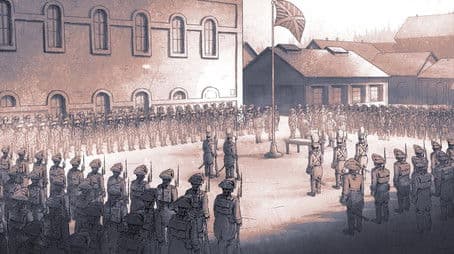
By 1750, the Promised Land in North America had already attracted almost 100,000 German-speaking emigrants. Without money for the long crossing, new arrivals had to work as indentured servants, ending up in the Brazilian jungle or in the French colony of Algiers. A few decades later, German-speaking immigrants contributed to the industrialisation of the USA.

3. Between Two Worlds (1848-1933)
After the revolutions of 1848, one million Germans emigrated to the USA, but came under suspicion of espionage during the First World War. Brazil remained open to German immigration and the largest national group of the Nazi Part was formed there. Germany’s crimes during the Nazi period destroyed the relationship between host countries and their German-speaking population.
Made with Love By Anonymous
This project uses the TMDB API but is not endorsed or certified by TMDB.